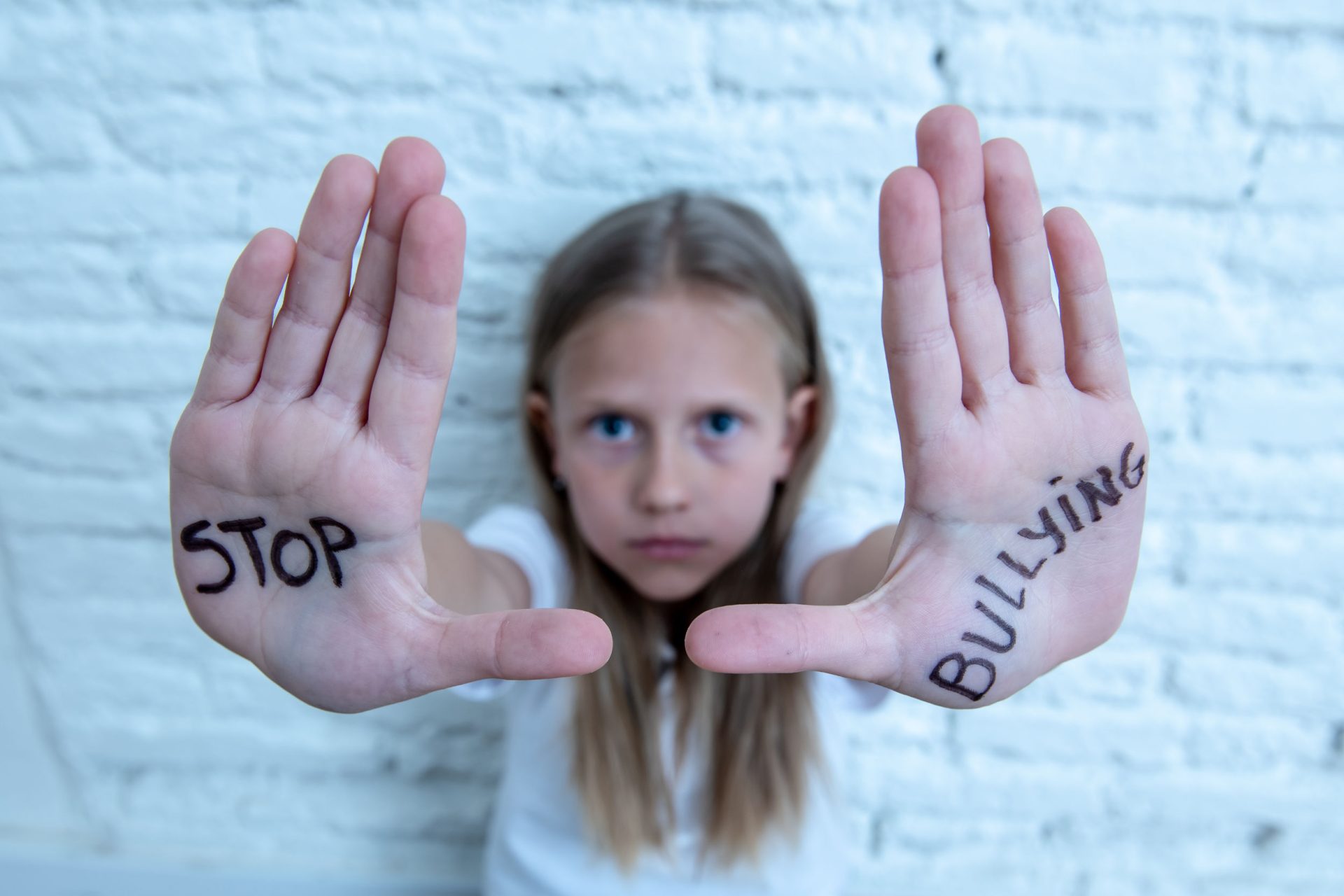
Bullying is an issue that is likely to affect every child, including yours. It is an ugly feature of growing up and can take many forms. It can also cause enormous stress to parents as well as to the child victims and can lead to disastrous consequences.
As a result, knowing how to identify bullying, how to approach your child and how to deal with the problem is an enormously useful tool for any parent to possess. Bullying can be dealt with and prevented, and your child can move on from the experience to live a happy and fulfilling life.
Parents first need to recognize that their child is likely to be bullied. Think back to your childhood and adolescence and remember the way that other children treated you. Some of these actions could be classed as harmless banter or light-hearted teasing. Other actions, however, were acts of bullying.
Bullying is a series of actions that are deliberate, repeated and occur within a power imbalance. The bullying can be physical, mental or emotional, it can happen in the real world or online, and it can be perpetrated by anyone who has any form of power over the victim.
Physical bullying includes poking, hitting, kicking, pushing and beating up. Verbal bullying encompasses yelling, taunting, name-calling, insulting and threats, while relational bullying refers to excluding, spreading rumours and getting others to hurt someone.
Cyberbullying is bullying that occurs online and is particularly prevalent on social media platforms where so many children now spend so much of their time.
Bullying can be challenging to identify firstly because that is exactly what the victims want. They don’t want anyone to know they are being bullied, because they feel bad about it, and because they fear that if anyone challenges the bully, it will only make the treatment worse. Furthermore, bullying often hurts on the inside, so there are no cuts or bruises.
In the case of cyberbullying, it is extremely difficult for parents, teachers or other adults to know that a child is being bullied because children retreat to cyberspace to escape from adults.
Is bullying different for boys and girls? The research, and the tales from victims themselves, would indicate that this is true.
Generally, girls report that bullying includes social isolation, name-calling, criticism of their physique and/or dress sense. Excluding one girl from a social group is a common form of bullying among girls.
Boys, on the other hand, are more likely to be bullied physically. Bigger, stronger and more assertive boys will use their superior physical strength to dominate their victim. Boys will also use name-calling, and it is still common for boys to be bullied through the questioning of their sexuality.
Of course, boys and girls can both suffer from any form of bullying.
Talk to your child about the issue before it occurs (and hopefully, it never will) Research children’s books of all ages which deal with the topic, and access other resources online, through local libraries or schools.
Understand your child’s rights and their right to be free from bullying, and arm yourself with this knowledge, especially if your child is more prone to bullying because of their race, physical ability, sexuality, religion, gender or physical appearance.
The following steps can be used with the bully, even if your child is the bully:
Ideally, you would like to ensure that your child is never bullied again. You’ve seen the side effects of bullying, and you don’t want your loved one to go through this experience again.
Aaron says he was bullied at school. He recounts his experience:
“I was bullied, but not severely. It made me feel bad about myself and bad about the world but not as bad as some other victims of bullying.”
“I went to an all-boys school, where rough sports and physicality were important. I was fairly skinny and very, very shy, so it was easy for other boys to pick on me. The bullying made me feel powerless and ruined my self-esteem, and I’m sure it affected my grades.”
“In the first few years of high school, the bullying was physical. Many boys would physically pick on me to prove their own strength and improve their status; I was an easy target.”
“This began to change in the last three years of high school.”
“It changed because I created an identity. I worked hard at sport (long-distance running), and I won a few races for the school – rep sport was a big deal at the school. I also got involved in some other extra-curricular activities, and I made friends across different social groups. More importantly, though, I became known as ‘Aaron the runner.’ If anyone mentioned my name, boys would reply;
“He’s the runner” or “The White Kenyan” or refers to the name of a famous runner of the time. I was perfectly happy with that.”
“The punching and pushing stopped. I’d earned some respect. I was still shy and quiet, but I am certain that a lot of the bullying stopped because I had created an identity for myself.”
In Aaron’s case, he created an identity, improved his self-esteem and made himself a harder target for the bullies at his school.
Experts also suggest training your child to be assertive, including through role play. Encourage them to nominate teachers or friends they can turn to if being bullied. Remind your child not to bully back, to avoid showing the bully any signs that they have succeeded. Also, walk away and try to avoid being alone.
Finally, seek professional help before bullying dominates your child’s life.
Bullying is an unfortunate reality for many children, but it can be stopped. Teach your children how to avoid, cope with and report bullying, and seek professional help to ensure that bullying does not prevent your child from living a full and prosperous life!
Do you run an ecommerce business? Then you already know just how accessible, innovative, and…
As the new year rolls around, it’s time to start thinking about your goals for…
Planning to travel and unsure if you can bring a beard trimmer on a plane?…
Carrying your baby shouldn't hurt your back. In this guide, we explore the best baby…
Music lessons offer numerous benefits, from enhancing creativity and building confidence to providing a personalized…
Blocked downpipes are a common issue for homeowners, particularly in Australia, where heavy rains can…


