As the new year rolls around, it’s time to start thinking about your goals for 2026. January resolutions commonly revolve around food, as we often spend Christmas ingesting an endless procession of meat, cheese, chocolate and alcohol.
Once the festivities end, it is the perfect time for a nutritional reset. Your diet is important for all aspects of your health, from strength and fitness to mental wellbeing. Getting the year off to a good start doesn’t have to mean an extreme cleanse or a strict new set of rules. Often, the biggest improvements come from small, realistic changes you can stick with.
A strong approach starts with awareness: what you’re putting into your body, how it makes you feel, and whether it supports the life you want to live. This may involve a complete change of diet, cutting down on treats, or just a few substitutions here and there. But it’s crucial you understand the effect that different foods have on your body if you are going to succeed—because “healthy” isn’t one-size-fits-all. Your needs depend on your lifestyle, activity level, sleep, stress, and even your schedule.
To get you started, here are four tips to supercharge your nutrition in 2026.
A lot has been made of the dangers of ultra-processed foods (UPF) in recent years. This term refers to food containing large quantities of additives and chemicals not traditionally used in home cooking. The majority of popular soft drinks, snack foods, sauces, and sweet treats fall into this category.
UPF has been linked to all kinds of health issues such as obesity, heart disease and cancer. While nutrition is complex and no single food causes illness on its own, a diet dominated by ultra-processed options can make it harder to maintain a healthy weight and balanced energy levels. These foods are often designed to be hyper-palatable (meaning it’s easy to overeat them), and they may be lower in fibre and micronutrients that help support digestion, heart health, and stable blood sugar.
As it is so prevalent, it would be very difficult to cut out UPF entirely, but it is important we understand the risks and take steps to reduce our intake.
A simple way to identify UPFs is to check the ingredient list. If you see a long list of ingredients you wouldn’t use at home—such as flavour enhancers, emulsifiers, stabilisers, and artificial sweeteners—it’s likely ultra-processed. Another clue is packaging and marketing: if it’s heavily branded, shelf-stable for months, and “ready-to-eat” with a long ingredients list, it probably falls into this category.
Simple ways to reduce UPFs without feeling deprived
Start with one swap per day (for example: yogurt + fruit instead of a packaged dessert).
Keep easy whole foods visible and ready (washed berries, bananas, boiled eggs, nuts, chopped veggies).
Build a go-to routine: a healthier breakfast and lunch can reduce cravings for processed snacks later.
Focus on “adding” first: more fibre, more protein, more water—your appetite often regulates naturally.
You don’t need perfection. Even reducing ultra-processed foods by a few servings a week can make your diet feel cleaner and more satisfying.
Cutting out unhealthy food completely is tough, but if you can find healthier substitutes for your favorite snacks, it will be much easier to improve your nutrition.
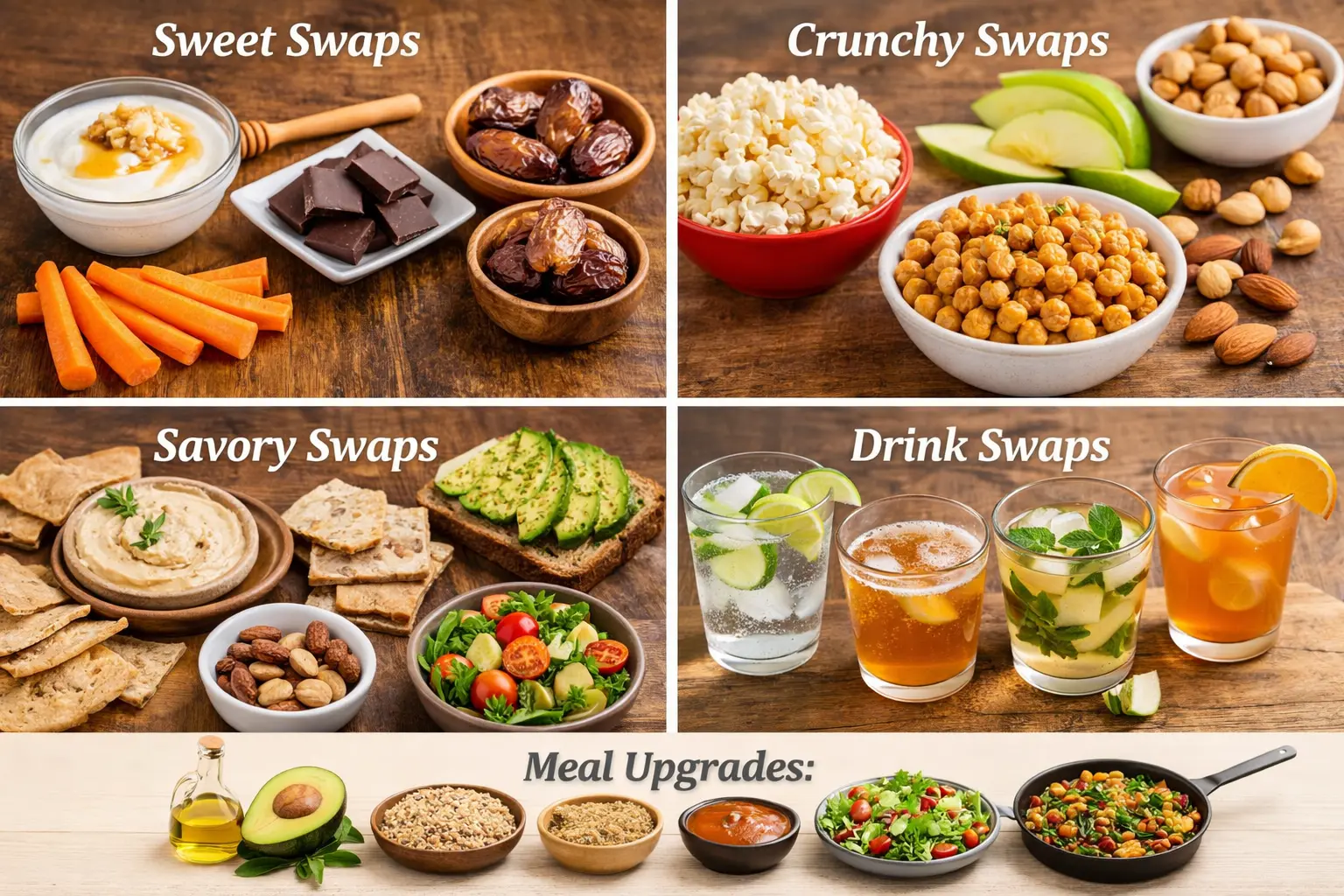
Switch out chocolate bars for energy bars made with dates for natural sweetness. Swap potato chips for salted nuts and trade carbonated soft drinks for juice or kombucha for gut health.
Substitutions work best when they still feel enjoyable. The goal isn’t to punish yourself with bland alternatives—it’s to find options that satisfy the same craving (sweet, salty, crunchy, creamy), while offering more nutritional value.
Smart swaps that still feel like treats
Sweet cravings: dark chocolate squares, Greek yogurt with honey, dates with nut butter, homemade trail mix.
Crunch cravings: roasted chickpeas, popcorn (lightly salted), nuts, sliced apples with cinnamon.
Snacky cravings: hummus with carrots or pita, cheese with whole-grain crackers, avocado toast.
Drink cravings: sparkling water with lemon/lime, iced herbal tea, diluted fruit juice.
Upgrade meals with small substitutions
Some of the best nutrition improvements happen during meals rather than snacks:
Use olive oil or avocado oil instead of heavy sauces.
Choose whole grains (brown rice, quinoa, oats) more often than refined carbs.
Add a vegetable side or salad to a meal that would otherwise be mostly carbs.
Replace part of the meat in a recipe with beans or lentils for added fibre.
Substitutions should match your lifestyle. If you’re always on the go, you may need “grab-and-go” options you can keep in the fridge, car, or bag. Consistency always beats complexity.
Your body is like a well-oiled machine. It requires fuel for it to work, and the better quality the fuel is, the higher your output. If you regularly take part in exercise or have a physical job, it’s important to think of the food you eat as functional.
Carbohydrates will give you energy, vitamin D and calcium are good for your bones, while protein will help you recover and build muscle.
The more active you are, the more important timing and balance become. “Fuel” isn’t just about calories—it’s about choosing nutrients that help you feel strong, focused, and stable throughout the day.
What a balanced “fuel plate” can look like
Protein: chicken, fish, eggs, tofu, Greek yogurt, beans (helps repair and keeps you full).
Carbs: oats, rice, potatoes, fruit, whole grains (main energy source, especially for workouts).
Healthy fats: olive oil, avocado, nuts, seeds (supports hormones and helps absorb vitamins).
Fibre + micronutrients: vegetables, legumes, berries (supports digestion, heart health, and immunity).
Nutrition timing for walking and running
If you’re running or doing harder sessions, a small carb-based snack beforehand can help (banana, toast with honey, yogurt).
After activity, aim for protein + carbs to support recovery (chicken and rice, eggs and toast, smoothie with protein + fruit).
If you feel low energy during the day, it’s often a sign you’re under-fuelling, especially at breakfast.
Some people use supplements to enhance nutrition and exercise, and while you may see health benefits if you buy retatrutide or other weight management solutions, it is important to do your research and seek health advice before doing so.
Supplements can be helpful in certain situations, but they are not a substitute for consistent eating habits. If you’re considering anything for weight management, performance, or metabolism, speak to a qualified health professional—especially if you have a medical condition or are taking medication.
Fixating on food can cause more harm than good. If you are too restrictive, it could lead to an unhealthy attitude towards food, resulting in undereating, poor mental health, and possible eating disorders.
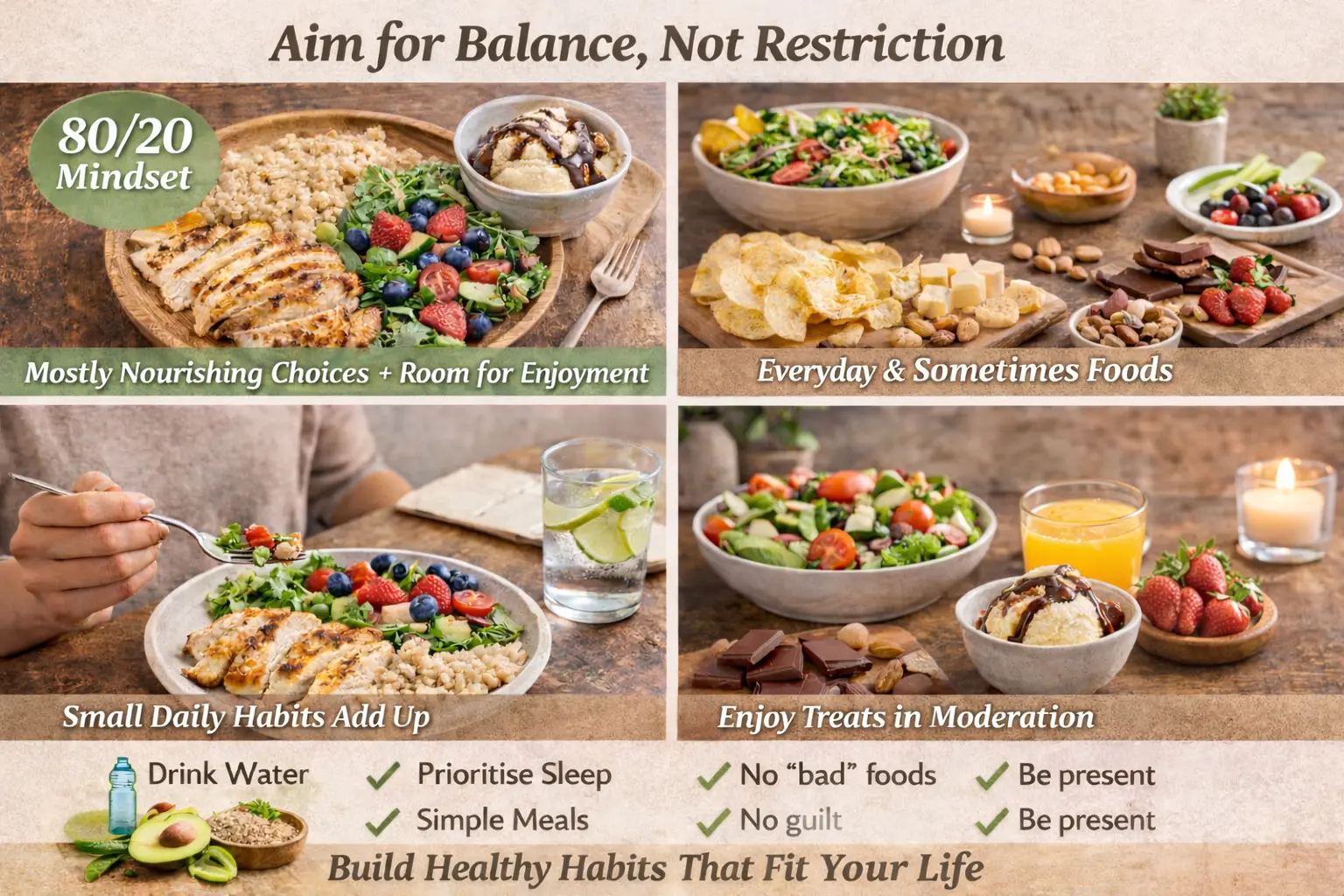
Rather than adopting an all-or-nothing approach, it is much better to aim for balance. There is nothing wrong with enjoying an occasional glass of wine or bowl of ice cream, but these treats should be enjoyed in moderation as part of a healthy diet. As long as you are also eating plenty of fruits, vegetables, and other nutritious foods, you can still enjoy a healthy lifestyle.
The best nutrition plan is the one you can maintain without feeling stressed or guilty. Balance means your diet supports your body and your life—your culture, your social events, your schedule, and your mental wellbeing.
Practical ways to build balance
Use the 80/20 mindset: aim for mostly nourishing choices, with room for enjoyment.
Don’t label foods “good” or “bad.” Instead, think “everyday foods” and “sometimes foods.”
Create a simple structure: protein + fibre at most meals helps reduce cravings later.
Keep treats intentional: enjoy them slowly, without distraction, and move on without guilt.
Small habits that make a big difference
Drink water regularly (thirst can feel like hunger).
Prioritise sleep—poor sleep increases cravings and reduces self-control around food.
Plan one or two easy meals you can repeat each week (less decision fatigue, more consistency).
Eat mindfully when you can: slower meals often mean better digestion and satisfaction.
A nutritional reset doesn’t have to be dramatic. Your goal for 2026 should be progress you can sustain: fewer ultra-processed foods, smarter swaps, better fuelling, and a balanced approach that supports both physical health and mental wellbeing.
Start with one change this week, and build from there. Over time, those small choices compound into a stronger, healthier lifestyle—without the stress of perfection.
Do you run an ecommerce business? Then you already know just how accessible, innovative, and…
Planning to travel and unsure if you can bring a beard trimmer on a plane?…
Carrying your baby shouldn't hurt your back. In this guide, we explore the best baby…
Music lessons offer numerous benefits, from enhancing creativity and building confidence to providing a personalized…
Blocked downpipes are a common issue for homeowners, particularly in Australia, where heavy rains can…
Navigating child custody and parenting arrangements requires careful consideration and legal expertise. This guide explores…