Your children mean everything to you. They are your motivation, your joy, and your hope, and there is nothing you wouldn’t do for them.
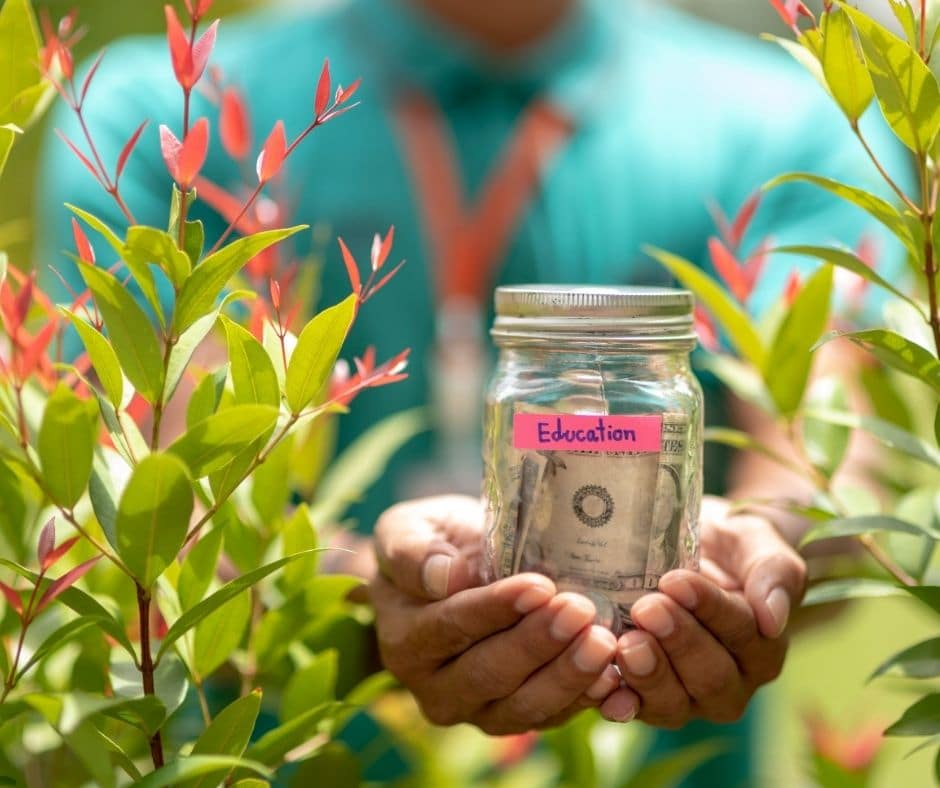
For this reason, you understand full well the importance of a good education in ensuring they live a long, prosperous, and fulfilling life. You also know that a strong education can cost money.
In this article, we offer some practical and proven tips to help you save your hard-earned money so that you can direct it to what matters most, educating your children for a better future!
Most parents set aside money to send their children to college or university. In many countries, this is expensive. The world is more competitive, as is the job market, and very few institutions offer free education.
Of course, after paying for tuition, students also need to cover their living expenses, and this is why it is necessary to think about saving years before your children finish high school.
Many parents are utilizing the services of a private tutor as they have discovered that individual or small-group instruction can be enormously helpful to students. The most viable schooling option for your child may be private schooling, and this does not come cheap. Of course, there are many unanticipated costs associated with modern education, especially in the realm of technology.
Don’t forget, too, that educational experiences are also valuable. Travel broadens the mind and can serve as an education for young people. Trips you take with your children can be educational as well as enjoyable. Through travel, your children may start to learn a new language and be motivated to continue that journey at home. They may be exposed to historical sites of interest and examples of great architecture or may even be treated to one of Shakespeare’s plays at The Globe Theatre. Travel offers so much more than souvenirs and selfies, so having enough money set aside for a journey is valuable.
Having realized that high-quality education for your offspring will involve some inevitable expense, how do you go about saving the money?
Read on!
Create an RESP. An RESP is a Registered Educational Savings Plan. The RESP is an account set up specifically for a child’s education and relies on contributions from parents every month. One recommendation is to establish the RESP as soon as possible so that the monthly contributions can be smaller and more achievable.
This method is particularly popular for parents saving money for a college or university education, especially in places where tertiary education is costly.
Remember, an RESP can be fixed or flexible. It can demand a contribution of the same value every month, or it can continue even if you are only able to put in a smaller amount sometimes. Ask this question of the financial institution when setting it up.
Various websites contain an RESP calculator, which can help you to estimate how much you will need to contribute each month to reach your long-term financial target.
You can have funds deposited automatically into the RESP. This can easily be set up at the time of opening the account and operates like a direct debit system that we use in so many aspects of our daily lives. It helps you to make contributions if you might otherwise forget, and guarantees that the correct amount of money is entering the account each month.
Another form of savings account is a non-registered account. This differs in that it offers more flexibility than an RESP. You can withdraw funds at any time, which can be advantageous, but it can also provide a temptation to use the money for purposes other than education. Furthermore, parents are taxed on all of the income and capital gains.
A Tax-Free Savings Account allows savings to grow tax-free, and an advantage of this option is that the money can be withdrawn, when needed, without having to pay taxes.
A trust is classified as a legal agreement in which money is transferred from one person to another according to specific terms. It is regarded as a sound method for controlling and protecting funds because the money will be used for its intended purpose — in this case, education.
This option offers peace of mind, but experts advise that it is vital to take time to properly outline the conditions of the trust when it is first established. Read the fine print!
One potential disadvantage of the trust option is that the 18-year-old child can choose to spend the large sum of money on how they wish – will they spend it on education?
If you are incorporated, or your family business is incorporated, you could pay out accrued savings as a corporate dividend and direct this money to education. To utilize this option, your child must own shares in the company.
One advantage of this method is that the child will pay the tax, and at the time the child receives the money, they are likely to have a low income and thus pay less tax.
Sell some of your unused personal items. If you have clothes, toys, sports equipment, and other household items collecting dust, sell them for a little extra cash. You can use various methods, and if you’re not keen on a garage sale or yard sale. you can take advantage of the plethora of online sales platforms that are normally free to use and allow you to sell items directly to other people in your neighbourhood or region.
You might be pleasantly surprised by how much you can earn for an item, as many of them are still in good condition. It’s also a great way to de-clutter!
How much did you spend on the last birthday party for your child? $100, $200? Did you need to spend that much?
If you spent $200, could you have thrown a perfectly enjoyable party for half the price, and sent the remaining $100 to the RESP?
Better still, could you organize a wonderful party for a fraction of the price? Many parents create fun parties for their children on a very tight budget with a bit of hard work and creativity.
Plus, if something does go awry, and the party doesn’t turn out exactly as planned, does it really matter? Often the mistakes, blunders, and bizarre birthday moments create the best stories for many years to come.
Also, think of other ways to reduce expenses. Ask whether children need expensive toys, or whether they can entertain themselves with a few simple toys and their imagination.
Consider how much time the children are glued to their video games and other screens, and how much that form of technology costs you.
A proven method for reducing expenses and having more money to devote to your child’s education is to do things yourself.
Sit down with your receipts and financial statements and ask whether you could have tried to do some of the leg work for the home improvements. If you can cook at home more rather than eating out or ordering delivery and if you can save money by fixing or reusing items instead of discarding them and buying something new.
Get your family and friends involved in the process of saving money as well. One example of how you can do this is to prioritize experiences over expense. The next time your child has a birthday or another special celebration, encourage relatives and friends to give them experiences rather than more expensive toys.
Have an aunt or uncle take them hiking or fishing, encourage grandma and grandpa to teach them how to cook, sew, or do calligraphy – or another special skill that they possess. Later in life, your children will remember experiences more than they remember expensive items.
Take this principle further and invite friends and relatives to forego a toy and instead contribute some money directly to the RESP.
Funding your child’s education is challenging but possible. Examine various savings accounts such as RESP or trust funds and determine which suits your needs. Also, consider cutting down on regular expenses and encourage friends and family to support your efforts by contributing directly to your child’s future education.
Try DIY and use hard work and creativity to avoid overspending, and before you know it, you will have put away enough money to fund quality education for your beloved children.
Do you run an ecommerce business? Then you already know just how accessible, innovative, and…
As the new year rolls around, it’s time to start thinking about your goals for…
Planning to travel and unsure if you can bring a beard trimmer on a plane?…
Carrying your baby shouldn't hurt your back. In this guide, we explore the best baby…
Music lessons offer numerous benefits, from enhancing creativity and building confidence to providing a personalized…
Blocked downpipes are a common issue for homeowners, particularly in Australia, where heavy rains can…


